AfrECC

The African Esophageal Cancer Consortium

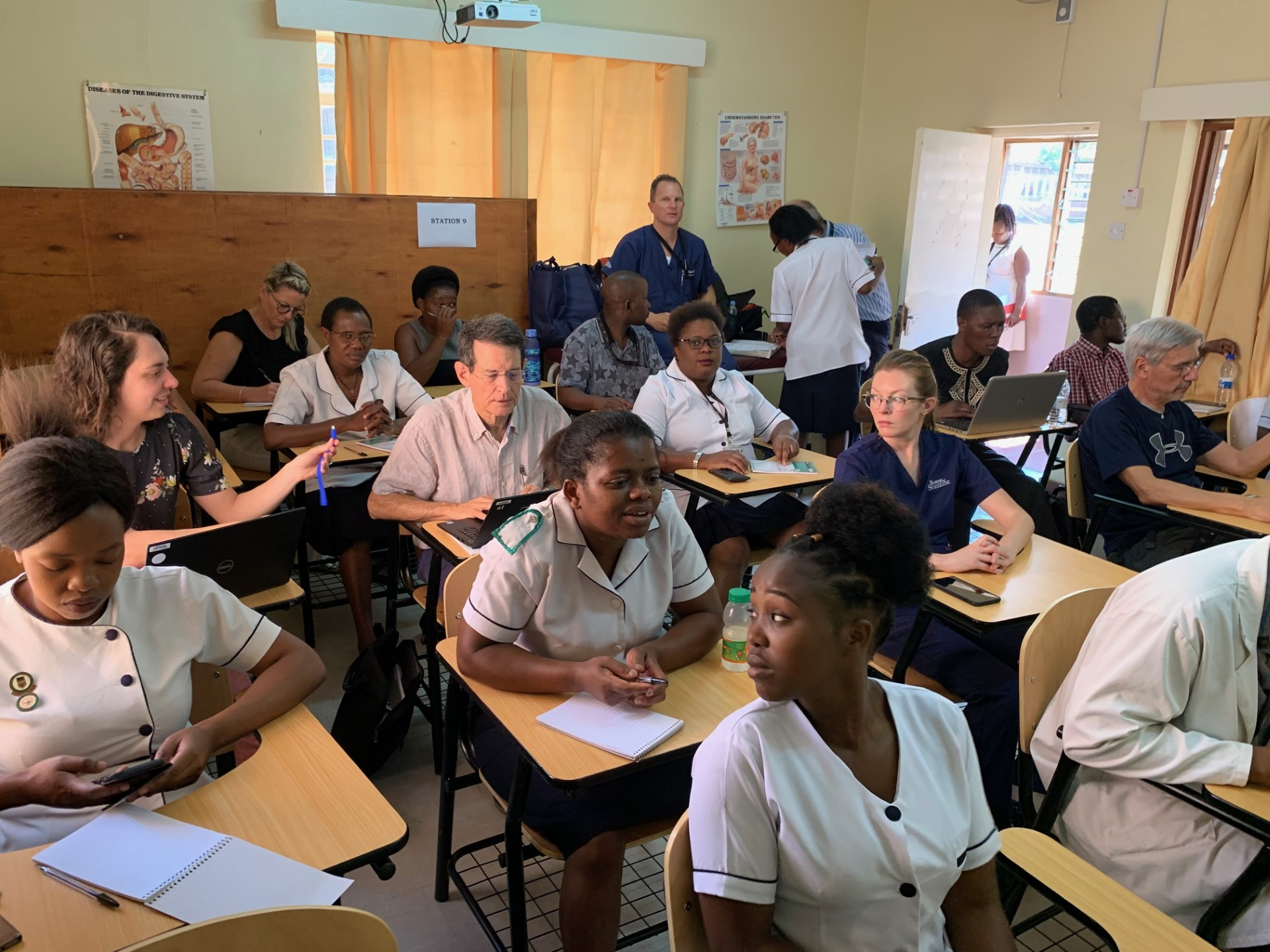
The African Esophageal Cancer Consortium (AfrECC) was formed in 2016 following a meeting at the National Cancer Institute that highlighted the exceptionally high burden of esophageal squamous cell carcinoma (ESCC) in eastern and southern Africa and the limited regional coordination in research and care. Since its inception, AfrECC has conducted seven epidemiologic studies to identify modifiable risk factors for ESCC and initiated clinical studies to advance early detection, treatment, and palliation strategies. The consortium has also evaluated barriers to care and strengthened regional capacity through more than a dozen hands-on training courses in ESCC management. The research efforts have resulted in over 80 peer-reviewed publications. In 2024, the AfrECC Foundation was established to raise funds to further support the consortium’s research, training, and patient-care initiatives.

Reducing the
burden of

Esophageal Cancer

in Africa

A specialized continent-wide network dedicated to
clinical care, education and research focused on reducing
the burden of esophageal cancer in the high-incidence
African Esophageal Cancer Corridor.

Vision: To end the suffering from esophageal cancer in Africa. We aim for a future where fewer people develop esophageal cancer, and where early detection and treatment are successful.

Mission: To reduce the burden of esophageal cancer in Africa through prevention research, clinical care, education, training and collaboration.

Two Entities, One Vision

Consortium & Foundation:

AfrECC is a scientific consortium of epidemiologists, scientists, clinicians, and trainees who have a collective mission to reduce the burden of ESCC  (Esophageal squamous cell carcinoma) in Africa.To support the sustainability of this work, the AfrECC Foundation was established in 2024 to generate dedicated financial support.

AfrECC Foundation: The support arm to AfrECC, dedicated to fundraising and ensuring the long-term sustainability of its work across Africa. Learn more about what we do through the foundation.
AfrECC: AfrECC’s work focuses on advancing etiology, early detection and clinical research, and on delivering clinical care and training to reduce the burden of ESCC in Africa.

The

Challenge

Esophageal cancer is extremely unevenly distributed. Eastern and Southern Africa face a unique burden of Esophageal Squamous Cell Carcinoma (ESCC).

3-6 months

MEDIAN SURVIVAL

After diagnosis
in African Corridor
475+

GLOBAL MORTALITY

Deaths recorded annually
due to esophageal cancer
100+

ACTIVE MEMBERS

Collaborating across 11 African
countries to drive change
14%

PATIENTS UNDER 45

High rates especially at young ages,
even in non-smokers and non-drinkers
30,000

REGIONAL BURDEN

New cases annually
diagnosed in Africa
90%

ETIOLOGY DIFFERENCE

Esophageal squamous cell carcinoma
(ESCC) histology dominates East Africa

The AfrECC

Methodology

Our integrated model ensures that research findings translate into practical, scalable prevention and clinical impact.

ETIOLOGY RESEARCH

Investigating environmental, lifestyle and genetic risk factors
EARLY DETECTION

Research to diagnose
patients at early stages
CLINICAL CAPACITY

Improving early diagnosis,
treatment and surgical training
TRAINING

Strengthening local expertise through workshops and knowledge exchange
PALLIATIVE STENTS

Expanding the use of esophageal
stents to restore the ability to swallow
ADVOCACY

Engaging governments to prioritize ESCC in national cancer control plans & policies

Our

Commitment

Research identifies modifiable causes.
Early detection improves survival.
Access to care restores dignity.
We are committed to reducing the burden of esophageal cancer in Africa through prevention research, early detection research, treatment access, and training. We are also raising awareness of the few established risk factors and the early symptoms of esophageal cancer, with the aim of diagnosing the disease at earlier, more curative stages. By strengthening healthcare capacity, expanding community awareness, and improving access to both curative and palliative care, we aim to save lives and restore dignity to patients and families affected by this disease.
PUBLIC AWARENESS
Educating communities about symptoms, risks and diagnostic routes helps promote earlier diagnosis and better outcomes.
ONGOING RESEARCH
Continued scientific research improves understanding of disease causes, prevention, and treatment strategies.
AFFORDABLE EARLY DETECTION
Developing low-cost screening tools helps identify diseases at earlier, more treatable stages.
STRENGTHEN CLINICAL CAPACITY
Training healthcare providers and improving medical infrastructure enhances diagnosis and treatment capabilities.
RISK FACTOR REDUCTION
Reducing exposure to known risk factors such as tobacco, alcohol, indoor smoke, and poor nutrition can lower disease incidence.
ACCESS TO PALLIATION
Expanding palliative care services helps relieve symptoms and improve quality of life for advanced-stage patients.

Many Risk Factors Found

Yet

Many Mysteries Remain

ESCC in Africa is thought to be shaped by distinct drivers. Through multi-center studies, we investigate how known lifestyle, environmental, and genetic factors converge within the high-incidence corridor. Yet, these account for only part of the disease, and our research is also focused on identifying additional causes.

AfrECC

Governance

AfrECC is led by a Steering Committee which is democratically elected by active AfrECC members. Each committee member serves a four-year term.

BEATRICE MUSHI, MD, MPH
Program Manager for Cancer Collaboration, Muhimbili University of Health and AlliedSciences (MUHAS)

DAR-ES SALAM, TANZANIA
GIFT MULIMA, MD
General Surgeon, Kamuzu Central Hospital

LILONGWE, MALAWI
GEOFFREY BUCKLE, MD, MPH
Assistant Professor in the Division of Hematology / Oncology at the University of California, San Francisco (UCSF)


SAN FRANCISCO, USA
MARK TOPAZIAN, MD
Professor of Medicine (retired), Mayo Clinic, Rochester, MN, USAVoluntary faculty, Saint Paul’s Hospital Millennium Medical College, Addis Ababa, Ethiopia

ADDIS ABABA, ETHIOPIA
VALERIE MCCORMACK, PhD
Deputy Branch Head, Environmental and Lifestyle Epidemiology, International Agency for Research on Cancer (IARC)

LYON, FRANCE
VIOLET KAYAMBA, BScHB, MBChB, MMED, FCP (ECSA), PhD
Senior Lecturer, University of Zambia School of Medicine

LUSAKA, ZAMBIA 
BLANDINA MMBAGA, MD, MMED, PhD
Program Director,  Kilimanjaro Research Institute

MOSHI, TANZANIA
CONSOLIDATED LEADERSHIP 
Ensuring professional integrity
across 14 sites and counting

AfrECC's

Collaborating Sites

Several international clinical and academic partners are also members of AfrECC. They include:

AfrECC's

Journey

Consortium Formation

AfrECC was formed at an NCI-IARC workshop in the US, bringing together clinicians and researchers to address the growing burden of ESCC in Africa

Governance Formalized

Formal bylaws were adopted, and a Steering committee was elected to provide structured leadership and oversight across consortium members.

AfrECC Foundation

The AfrECC Foundation (501(c)(3)) was established to support long-term sustainability, fundraising, and strategic growth of the consortium.

Call to Action

AfrECC published its first roadmap, defining the African ESCC corridor and outlining priorities for research, clinical care, and capacity building.

Read the publication →

Global Recognition

AfrECC's work was featured in Nature Reviews, highlighting the consortium's contributions to understanding and addressing ESCC in Africa.

Read the article →

The Ecosystem

Of Collaboration

A multi-sector approach is vital to solving ESCC. We work with specialized groups across the globe.

UNIVERSITIES

To attract research funding and to designresearch studies on the causes of esophageal cancer
HOSPITALS

To enable high-quality clinical care, patient recruitment, and surgical expertise
GOVERNMENT

To work with Ministries of Health to shape evidence-based esophageal cancer control plans
WORLD WIDE EXPERTS

To provide capacity building opportunities for esophageal cancer researchers and clinicians
NOT-FOR-PROFITS

To attract research funding and to design research studies on the causes of esophageal cancers
IGOs

To coordinate with intergovernmental organizations such as WHO and IARC to scale impact globally